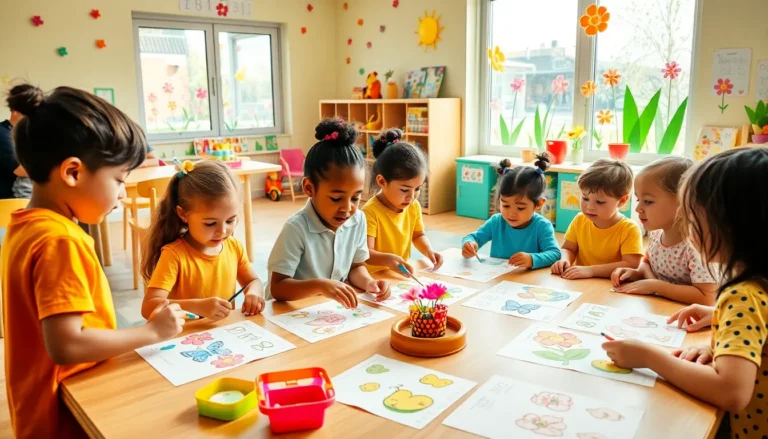
In a world brimming with screens and distractions, how do we spark that age-old wonder in kids? Fear not. STEM experiments for kids offer a fantastic blend of fun and education. Imagine transforming your kitchen into a science lab, where vinegar erupts like a volcano and glowing liquids burst into life. Not only are these experiments exciting, but they also lay the groundwork for critical thinking and creativity. So let’s jump into why STEM education is essential and how you can easily conduct these captivating experiments at home, all while wearing your coolest lab coat.
Why Stem Education Matters

STEM education, science, technology, engineering, and mathematics, is the backbone of a well-rounded curriculum. Not only does it arm children with foundational skills, but it also encourages a love for learning.
Promoting Critical Thinking Skills
Through STEM activities, children learn to question, analyze, and develop solutions. They become little problem solvers, piecing together evidence and drawing conclusions. It’s amazing how a simple experiment can cement critical thinking skills. When kids explore through hands-on activities, they are not just memorizing facts: they’re applying knowledge in real-world contexts.
Encouraging Creativity and Innovation
STEM is not just about rigid formulas and numbers. It’s an open canvas for creativity. Kids get to think outside the box (or beakers, in this case). In a world that thrives on innovation, fostering a creative mindset at an early age primes kids to think of groundbreaking solutions. Imagine a child coming up with the next big tech gadget or an environmentally friendly energy source, all thanks to lessons learned through playful experiments.
Building a Foundation for Future Learning
Engaging in STEM experiments provides kids with skills that are transferable to almost every field imaginable. Understanding fundamental concepts in these areas equips them to tackle more complex problems as they advance in school.
Not only does it strengthen their grasp on academic subjects, but it also cultivates resilience. When they encounter failure, like a volcano that doesn’t erupt, they learn to troubleshoot and try again. This ability to pivot and adapt is crucial for anyone hoping to succeed in the fast-evolving world.
Top Stem Experiments For Home
Now that we understand why STEM education is critical, let’s roll up our sleeves and jump into some hands-on experiments that families can do together. These activities don’t require a lab full of fancy equipment, just some common household items and a sprinkle of creativity.
1. Homemade Volcano
This classic experiment is always a hit. Using baking soda, vinegar, and food coloring, kids can create a spectacular eruption. It’s a fun way to demonstrate chemical reactions and simple science in action.
2. Invisible Ink
By mixing lemon juice with a little water, kids can write messages that only become visible when heated. It’s like a secret agent mission right in your own home.
3. DIY Lava Lamp
All you need is a bottle, water, oil, food coloring, and an Alka-Seltzer tablet. The bubbling effect mimics a lava lamp and teaches kids about density and reactions.
4. Balloon Rocket
Attach a straw to a balloon and secure it on a string. When released, the balloon slides along the string, demonstrating Newton’s laws of motion as it propels through the air.
5. Egg Drop Challenge
For those ready for a real challenge, the Egg Drop Challenge is the way to go. Kids are tasked with creating a contraption that will prevent an egg from breaking after being dropped from a height. This experiment requires ingenuity, problem-solving, and understanding of physics principles. The anticipation as the egg is dropped is thrilling. Will it survive?
The lessons learned here are invaluable, teamwork, engineering concepts, and a dash of perseverance come into play.
Setting Up a Stem Experiment
Ready to start experimenting? Setting the stage for a STEM activity doesn’t have to be complicated. The key is in the preparation.
Choosing the Right Materials
Select experiments that require materials easily found at home. This not only makes it more accessible but also empowers kids to recognize the scientific principles in their everyday surroundings.
Gathering Supplies
Collaborate as a family to gather materials before beginning. This involvement sets the tone for teamwork. Kids can take pride in contributing to the experiment setup, making them more excited about the outcomes.
Safety Considerations
Before diving into these world-changing experiments, child safety should always come first. Always supervise children during STEM activities, especially those involving chemical reactions or potential hazards.
Wearing safety goggles and gloves can add a fun twist while also ensuring protection. Discussing safety protocols before conducting experiments creates an awareness that will stick with them.
Encouraging Curiosity and Exploration
One of the most beautiful aspects of STEM is its ability to ignite curiosity. Encourage kids to ask questions about what they notice during experiments. Why does the lava lamp bubble? What happens if we change the amount of vinegar in our volcano?
These questions foster an inquisitive mindset, leading to a deeper understanding of scientific concepts. Making science a part of daily life ensures that the exploration continues beyond the confines of the kitchen lab.