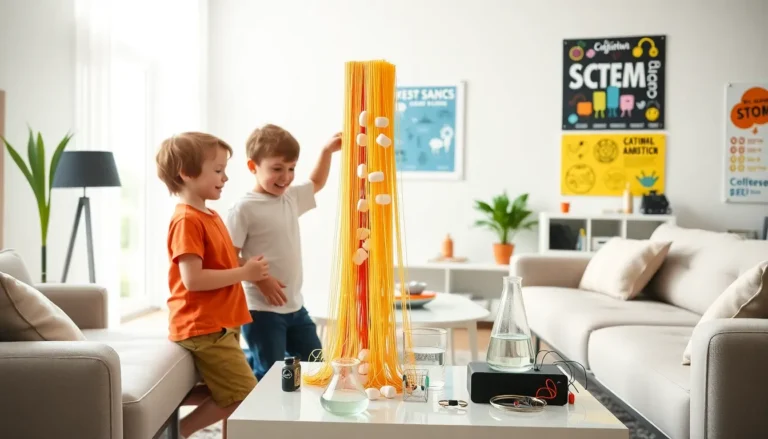
STEM education is not just a buzzword, it’s the gateway to exploration, creativity, and yes, even a bit of chaos (the good kind, of course.). With easy STEM projects for kids, young minds can dive headfirst into science, technology, engineering, and math without being frazzled by textbooks. Picture this: a homemade volcano erupting in your kitchen or a balloon rocket zooming across the living room. Sounds pretty thrilling, right? Let’s embark on a journey filled with joy and discovery as we explore why STEM projects are crucial for your child’s growth and thrill, all with a touch of fun.
Why STEM Projects Are Important

Understanding the importance of STEM projects is vital for parents and educators. They provide an excellent foundation for a child’s future, whether they aim to become scientists or artists.
Benefits Of Engaging In STEM Education
STEM projects foster curiosity. When children engage in hands-on learning, they experience concepts visually and tangibly, which helps cement knowledge. Through this type of education, kids often develop skills like critical thinking, teamwork, and resilience.
Also, STEM activities can ignite a lifelong passion for learning. Children exposed to hands-on experiences are more likely to explore intellectually stimulating opportunities as they grow.
Encouraging Critical Thinking And Problem Solving
STEM education encourages kids to tackle problems head-on. When constructing a project, they learn how to analyze and approach challenges creatively. This process builds confidence because they realize they can brainstorm solutions when faced with difficulties. With each small failure, they gain resilience, an important trait that will benefit them in all areas of life.
Enhancing Creativity Through Hands-On Learning
Hands-on learning opens the door to creativity. When kids see how fun projects can be, their imaginations run wild. They not only learn facts but also change their perspectives on learning altogether.
Understanding the scientific method through projects lets children explore ideas and outcomes. They begin to think outside the box, which helps develop skills essential in all fields, including the arts and humanities.
Simple STEM Project Ideas
Let’s get to the exciting part, doing some fun projects. Here are five simple yet captivating STEM projects that kids can try at home:
1. Homemade Volcano
Creating a volcanic eruption is a classic. Use baking soda and vinegar to simulate lava flow while explaining the science behind eruptions. This project captures kids’ attention as they eagerly await the explosive reaction.
2. DIY Balloon Rocket
Using a straw, string, and a balloon, kids can create their very own rocket. This project teaches them about propulsion and motion in a thrilling, hands-on way.
3. Building a Simple Circuit
Introduce children to electrical engineering by using batteries, wires, and a small light bulb. Building a circuit shows them how electricity flows and provides a great opportunity to discuss safety.
4. Creating a Water Filtration System
Using everyday materials like sand, gravel, and activated charcoal, kids can build a simple water filtration system. This project is perfect for discussing environmental science and clean water initiatives.
5. Marshmallow and Toothpick Structures
Using marshmallows and toothpicks, children can construct their own architectural masterpieces. This activity encourages creativity and teaches basic engineering principles.
How To Make STEM Learning Fun
Learning about STEM shouldn’t feel like a chore. Here’s how to spice things up:
Incorporating Play Into STEM Activities
Play is a fantastic learning tool. When kids don’t realize they’re learning, they absorb information more effectively. Incorporate games into projects where kids can compete or work together. They’ll likely enjoy the activities more when they’re having fun.
Utilizing Everyday Materials For Projects
Who says STEM projects need fancy kits? Everyday materials can be just as effective and often more relatable. Kids can use kitchen items, recyclable materials, and even outdoor treasures to inspire creativity. This approach not only encourages innovation but also reduces waste.